Sitting in a quiet theater, the lights dim, the trailers begin, and the crowd starts to quiet down. Eventually, the movie starts, but only after getting you thoroughly excited for what’s to come. Finally, the film rolls, and the sound makes its transition from loud and in-your-face noise to measured, nuanced movie magic. This effect of audio mastery fully accentuates the intended emotion that the director envisioned.
But then you hear it: people whispering LOUDLY.
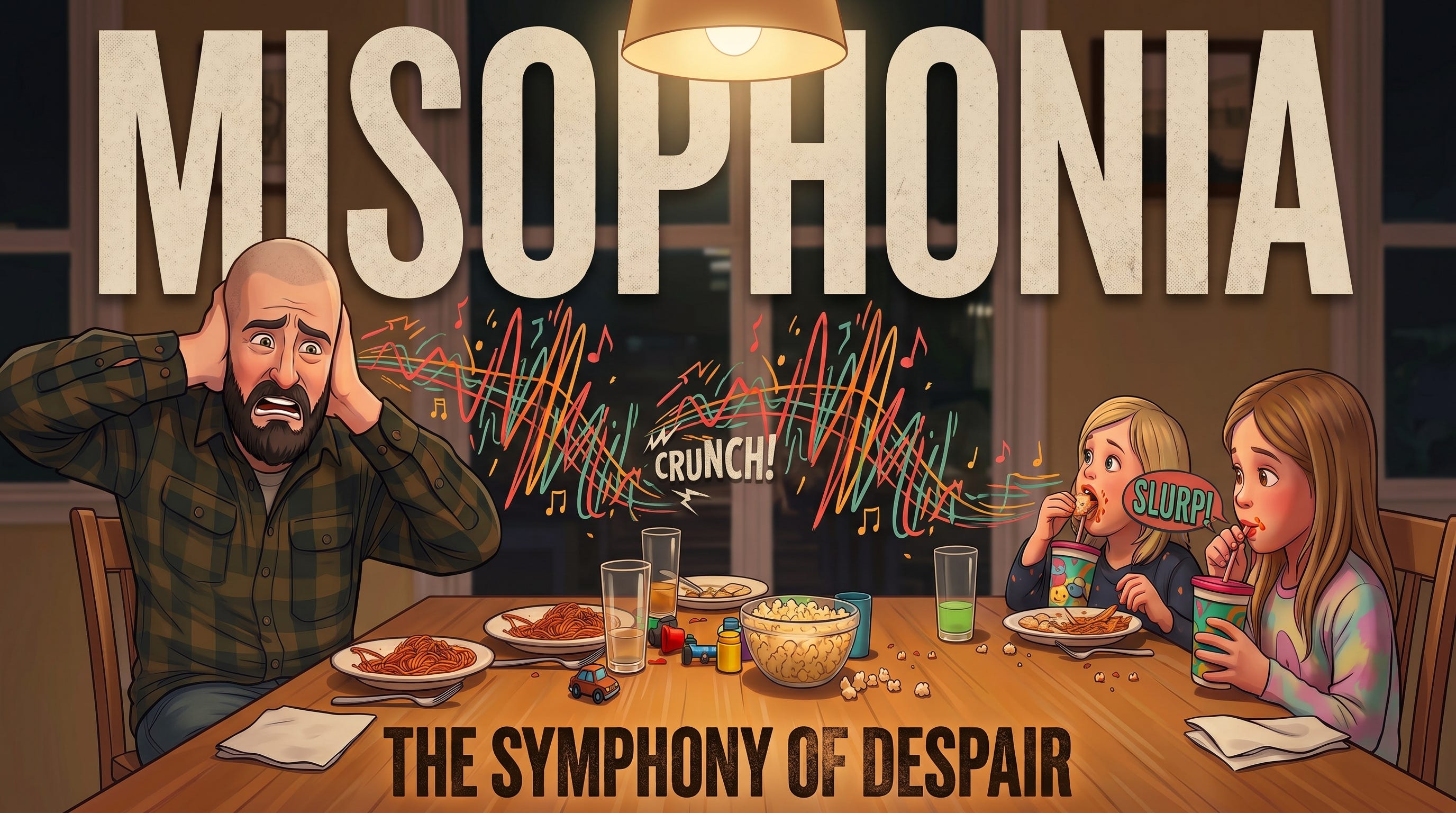
Oh, how you wish they would just shut up. Don’t they know they’re in a theater with other people? Then the popcorn munchers begin their descent into a never-ending bucket of despair. They crunch and munch loudly and slurp their overly large sodas intermittently, laughing or gasping at all the right parts that I, in turn, am missing because all I can focus on is this symphony of phonal distractions.
I hate this. I hate it so much that I will often perseverate on it for a prolonged period of time after the whole ordeal has ended. I don’t go to movie theaters anymore.
I have misophonia. When appropriately translated, it means a hatred of sound, and it is one of the most aptly named maladies to plague mankind. I would guess that many folks have never heard of this scourge. It’s a recently recognized disorder, but I would wager that many people are afflicted with this disease of hypersensitivity without even knowing it.
For those of you wondering what exactly this affliction is, the PubMed article “Beyond the Sound: The Role of the Source of Human-Made Trigger Sounds in Misophonia” describes it accurately:
“Misophonia is a neuropsychiatric disorder characterised by abnormally extreme reactions to certain sensory stimuli. The term ‘misophonia’ was coined in the early 2000s, combining the Greek words miso, meaning hatred, and phonia, meaning sound... Triggers in misophonia can be human, such as throat clearing, chewing, slurping, smacking, breathing and gasping... The intensity of the emotional response to the trigger is expressed through emotional reactions (anger, anxiety, disgust) and physiological activation (muscle tension, increased heart rate, skin reactions)... Common behavioural responses include staring at or imitating the person making the sound, verbal agitation or aggression, and rarely physical aggression.”
I have experienced almost all of the aforementioned reactions—except for physical aggression. It’s bad. This plague upon my auditory system waxes and wanes in intensity, but it is ever-present. Just ask my family. They’ve all become accustomed to my customarily contained rage around the dinner table.
My absolute worst trigger is the sound of eating. That includes all variations of consumption: slurping, munching, crunching (especially crunching), sipping, lip-smacking, loud breathing, swallowing, silverware clanking, and many more I’m unable to recall until they happen and my rage-o-meter explodes.
You may be reading this and wondering if I’m a complete psychopath. No, not according to my therapist. She assured me that I’m not a psychopath, but maybe a little OCD and probably autistic. In this specific scenario, that’s entirely relevant because misophonia typically afflicts a very narrow group of individuals, with autism frequently being a comorbidity.
The Thirst for Quiet
Another one of my major triggers is loud music. Not loud music that I’m playing, mind you. It’s the type of loud music that radiates through the walls of your home and is predominantly muted except for a repetitive bass track that permeates my peace and quickens my pulse. I can’t tell you how enraging it is just hearing a hint of someone else’s music invading my home.
I have several stories about how I’ve reacted to these triggers over time. I like to think I’m handling these episodes much better than when I was in the Army, but I can still recall many different confrontations I’ve had throughout the years simply because people were doing things that triggered my misophonia. Granted, in most of these cases, the destructors of my inner zen were most assuredly being inconsiderate to those around them. BUT, most people in these situations would probably just shrug it off and move on with their day.
Not me. I have to address these grievances. If I don’t, I suffer physical repercussions. I would liken it to being thirsty. Have you ever been so parched that you were forced to forgo all else in the moment just to get a drink? It’s that type of compulsion, and it all stems from the overwhelming desire to eradicate the source of my sensorial assault.
Over time, I’ve mostly been able to cope, resisting the urge to flip tables and throw chairs when I hear and see someone chewing with their mouth open. Most of the time, I’m even able to stop myself from saying anything because snapping usually results in unintended hurt feelings that I always feel guilty about after the fact. When I do find myself vomiting out a verbal assault on someone’s inability to consume food like a civilized human being, I usually have to immediately apologize and explain, “It’s not you, it’s me.” And that’s the truth! The problem is that most people still become deeply embarrassed and, typically, offended.
Exposure Therapy at the Dinner Table
Do I wish I didn’t have this affliction? Yes. It’s awful and makes me feel like an asshole all the time. It makes benign things, like family meals, a daily test of willpower and a grueling exercise in enduring constant discomfort. “Discomfort” seems like too light of a description, but I don’t know of any other way to describe it without sounding like I need to be in a padded cell.
There is no cure for misophonia; there are just strategies to mitigate the effects. And ironically, one of the best strategies I’ve found for combatting this is having kids.
My kids have broadened my ability to contain myself, bigly. I think most parents can easily see how. Have you ever been around a child eating? It’s horrendous. Those tiny, uncouth monsters have absolutely no ability to contain the myriad of sounds coming out of their rat-holes when consuming sustenance. They can’t help it... until they can.
Maybe that’s the underlying point of all this. Having misophonia forces me to crave control and quiet, but being a father forces me to let go of that control and build patience instead. I give myself a little grace for the way my brain is wired, and I give them grace as they figure out how to be humans in the world. It’s my job to raise ‘em right and teach them how not to be savages. It’s too late for adults, so hopefully the exposure therapy that my kids are giving me pays dividends. If I raise them well enough, maybe I’ll save some other poor, misophonic soul in a movie theater twenty years from now.
Dad out. To get some earplugs.