 Every so often I'll run across a video or person talking about "girl math." I used to think this was a complete load of crap until I became a father and found myself conducting my own version of math that I will now coin as Dad Math. I believe I can forge a solid argument for both girl math and dad math and open it up into a broader context of male vs. female math and their impacts on spending habits. Let's start with the gold standard.
Girl Math I think to fully understand these new methods of mathematical genius, we have to define what they are. According to a Reddit math sub, girl math is loosely defined as: a viral social media trend and humorous internet slang used to rationalize purchases and justify spending money through playful, self-deluding logic.
Oh, that can't be right! This definition states that girl math is "self-deluding" and I think that's objectively unfair. I would argue that individuals engaging in this genre of math do so knowing full well what they are doing. I would also argue that there has to be some merit to this argument, as it wouldn't be so widely used if there weren't. Let's take a look at what actually constitutes girl math. After conducting broad research on this topic using Google and social media sources such as Youtube, there are many specific examples of how girl math works:
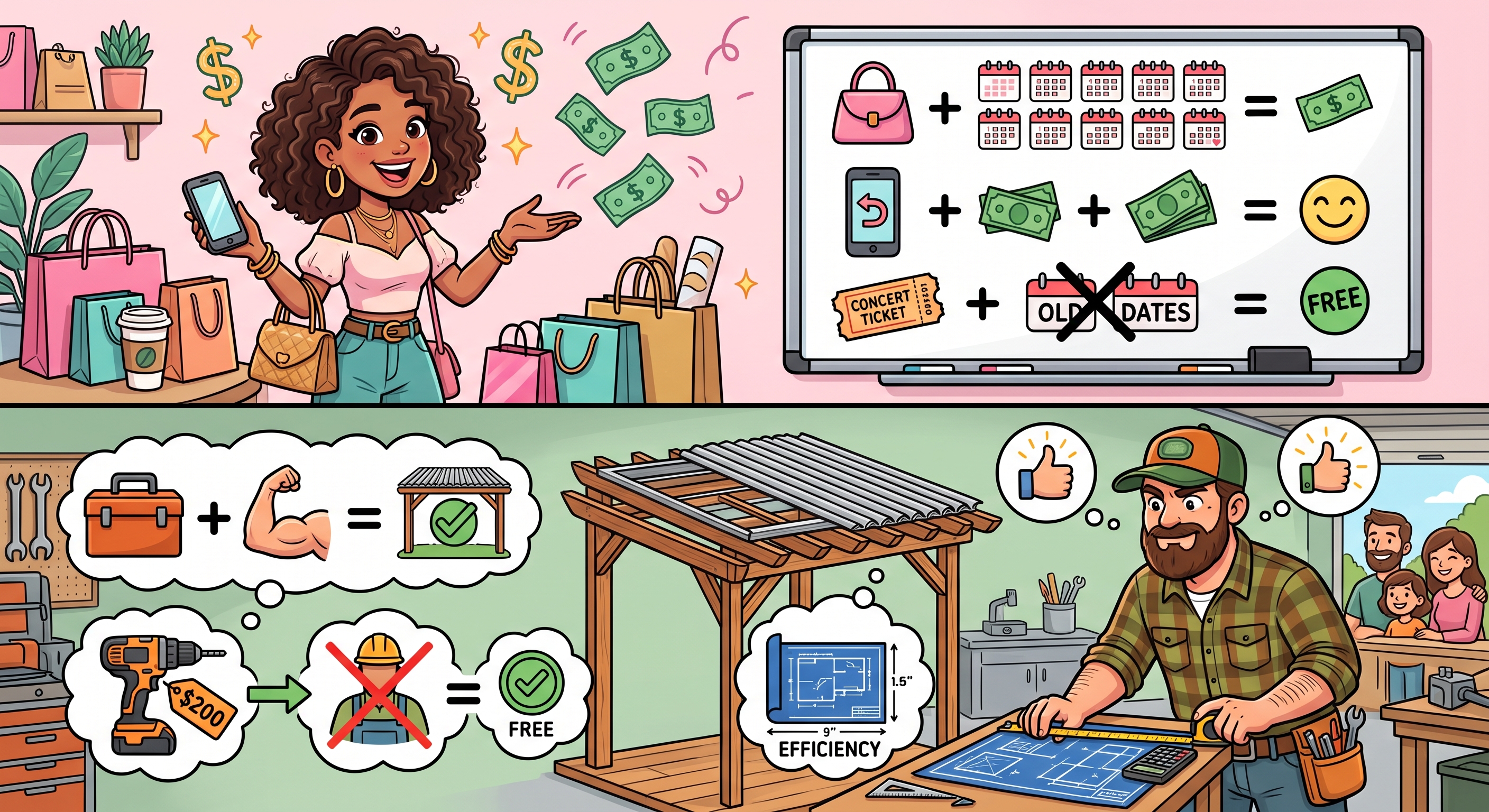
Free Events. According to girl math, if you pay for something well in advance, such as any type of event, concert, travel, etc., it's effectively free. It's logically free because you paid for it so long ago that you've forgotten the cost, completely negating your initial investment. This is absolutely sound logic. If you don't remember spending money, did you really? It's the age-old question of, if a tree falls in the woods, does it make a sound if no one is there to hear it? Of course it does. That is a stupid question.
Cash and Small Purchases. This tenet of girl math espouses the idea that if you spend cash, it doesn't affect your online account balance, therefore making the item free. Cash is fleeting, but those online numbers are more solid than a physical bill in your hand, considering that money isn't reflected in your digital hoard. This marries well with "small purchases" as items of a minute value don't effectively register any considerable changes to your overall account balance...that is, of course, unless you make lots of these illicit microtransactions, but who's counting?
Cost-per-wear. This idea will overlap with dad math. Cost-per-wear breaks large purchases into a simple return on investment (ROI). Further, if you spend triple digits on a singular clothing item but divide the overall cost by the amount of times you intend to wear it, you reduce the overall cost of the items, bringing down your cost per wear, or CPW. For example, if an item costs $100 but you plan to wear it 25 times, you are bringing your CPW down to $4. That's a bargain!
Refunds. Refunds are straightforward. If you return an item, you aren't getting a refund; you're turning a profit because that money was already spent. Since you had already spent the funds for the returned item, you technically aren't getting your own money back; you're just gaining income to spend elsewhere. Completely logical.
Failure to plan is a plan to fail. A friend/mentor used to say this exact phrase all the time, and I think it's applicable here. Our final example of girl math is cancelled plans. If you don't go out, you're effectively saving that money for other things that you would have spent going out. This one actually alludes to the simple act of saving money but fails miserably when you intend to spend your perceived savings. Not very thrifty, but hey, we're using girl math so those stuffy old rules don't apply.
Now that we've established a baseline of what girl math is, how does it hold up in reality? I would posit from a logic-based perspective it holds up rather well! Let's look at it this way: girl math is simply a framework for the shifting of funds to justify continued spending. This serves several purposes. First, women (or men) that practice girl math are driving the economy! That's right, we operate on the simple principle of consumption in the United States, and if we aren't consuming, our economy isn't moving forward. Girl math is effectively propping up the entire US economy by driving sales. Thanks, girl math.
Second is the factor of happiness. For many, shopping brings happiness, albeit fleeting happiness, but who cares?! Those 30 seconds of satisfaction might be enough to get you through the day. Want a $7 coffee that tastes like sugar and pumpkin puree? Just use girl math; that purchase won't even register because it's so minuscule. Do you want that $500 handbag but are unsure if you can afford it? Just apply CPW and see if your effective price is much lower than the total. Let's face it, applying girl math culminates happiness, and you can't put a price tag on happiness.
So, if girl math is bringing so much joy to large throngs of women across the globe, why haven't most men picked up this glorious mode of thinking as well? I would argue that they have, but with subtle differences, and this brand of math really doesn't apply until you become a dad, but we're inclusive, so let's just say all men.
Dad Math This type of math doesn't have a specific definition or tenets to break down, so we're going to do that here and now. I've found myself subconsciously practicing what I would call "dad math" all the time. Inverse to girl math, I would argue dad math actually saves money versus spending it. Let's explore the pillars of Dad Math and see exactly how I'm supposedly pinching pennies.
Pillar 1: Do it yourself Fathers and men across the nation often come across a home project and think, "Man, I can save so much money if I just do this myself." Now there are few different aspects of DIY that I have to mention before getting to the ultimate savings of doing something yourself.
First, if you don't already have the tools, you're going to offset some of your savings by calculating the total cost of needed tools and materials. If you don't have the tools required, you obviously have to buy them! How else can you save the massive amounts of money by doing it yourself?
Second, you need to overevaluate your own skills in being able to complete your objective. If you've never tackled the project in question, you may need to objectively quantify the total cost of having to hire someone to "fix" your overconfident mistakes. This past year, I installed an aluminum adjustable louvered pergola on our new patio. I was able to accomplish our goal and save thousands of dollars even after buying the required tools. Never mind that I had no idea what I was doing; that's what YouTube is for!
Third, evaluate the value of your time. If the hours spent working on your project would cost you more money than putting that energy elsewhere, you should probably contract it out. Usually my time isn't worth shit, so I'll at least attempt to do it myself. I would wager your time isn't that valuable either, and if it is, you can afford to pay someone.
We've now arrived at the real math of DIY, the money that you save can be put towards other projects! That's right, all of that money saved in labor effectively gives you a net-zero cost on your next endeavor. Hence, dad math.
Pillar 2: You can never have enough tools. This pillar specifically builds off the first in that requiring the right tools for the job saves you money eventually. This is also akin to girl math regarding CPW. If a tool costs $200, that tool essentially becomes free when you calculate the labor cost saved and the future savings of having that tool on hand to tackle projects in the future. It's a win-win; you get to increase your tool chest and effectively earn those tools for free! This can apply to many different aspects of life to include, one of my favorites, mowing. You obviously need to have a proper EGO electric mower setup; otherwise, you may have to pay someone to mow your lawn. Dad math.
Pillar 3: Hero Complex Can you actually put a price tag on the accolades you'll receive for a job well done? Absolutely not! The looks of adoration that your wife and kids will give you after tackling a project all by yourself can't be bought. This joy will often save you money in the long run by not having to spend money to feel good about yourself. The offset in the joy premium will surely save you money in all aspects of your life. You can't put a price tag on being the family hero.
Pillar 4: The efficiency clause I can plan trips, projects, meals, etc. down to the tiniest of details. This efficiency in planning saves me so much time and money that these activities essentially pay for themselves. Not only that, but the time spent in planning keeps me from frivolously spending money in other areas of life, like leisure activities. If I'm too busy planning the tiniest of details I obviously can't spend time in thinking of different ways to spend the DIY savings, thereby keeping even more cash in our pockets! You can't lose doing those prolonged calculations of efficiency.
The proof is in the savings. We've highlighted the differences between girl math and dad math, and I must say, they both have their merits. Is there room for improvements? Of course, but that doesn't negate the sound logic in practicing these specific brands of mathematics. Women and men have bucked the traditional science of cost savings through common-sense approaches to saving money. Never mind that, on paper, no money was actually saved but you can't prove me otherwise because some of those benefits are immeasurable in value. Also, never mind that my wife thinks I'm crazy for coming up with all the savings for our family. She's just jealous she doesn't get to be the hero in tackling home projects.
Dad out...to keep saving us money!