Have you ever watched an episode of PAW Patrol and had that geriatric Millennial moment thinking, "Wow, cartoons sure do suck today!"? I know I do every time a modern-day cartoon, kids' show, or any type of children's program comes on. I don't know why, but kids' television today just sucks. It's boring as shit, and there are absolutely no plotlines. When and why did this happen? Or am I just becoming a grumpy old man waxing nostalgic for an era that's no longer relevant? I know in my heart of hearts that something's changed. Let's explore.
The Only Good (Not Really) Thing Reagan Ever Did
The first stop on this journey through my epic childhood is Ronald Reagan. Reagan is the much-lauded beacon of conservative ideology and the gold standard of Republican nostalgia for a bygone era. I could write pages on how much Reagan actually sucked as a president, but that's not what we're doing today; maybe another time.
One thing Reagan did that inadvertently created some of the best memories of my childhood was deregulate program-length commercial restrictions on toys. What this boils down to is that toy manufacturers, or anyone else, could create programming content (cartoons) with the sole intent of selling kids plastic amalgamations of their favorite animated infomercials. To simplify it even further: targeted advertising dressed up as children's programming. On the surface, this shit appears to be pretty evil. But in reality?
This deregulation churned out the BEST programming, plotlines, and animation of the 20th century. Talk about the only valid instance of trickle-down economics. After deregulation, those fantastic shows trickled into my brain, subversively forcing me to buy more action figures (they aren't dolls, gosh!).
Here is a great synopsis from comicbooks.com's "3 Cult 1985 Animated Shows That Every 80s Kid Wishes Were Still On Every Saturday Morning" (good grief, that's an overly long title). Anyway, this is what the article said:
In the 1980s, the deregulation of children’s television advertising under the Reagan administration’s FCC chairman Mark Fowler removed the program-length commercial restrictions that had previously kept toy advertising and cartoon content separate. Studios responded by building entire series around action figure lines rather than treating merchandise as secondary to animated shows. That meant Hasbro, Mattel, and Kenner effectively became executive producers by proxy, dictating character rosters, vehicle designs, and villain factions to studios like Sunbow, Rankin/Bass, and Hanna-Barbera before a single script was written. Despite the cynicism of most of 1980s animation, the decade still produced unusually dense animated storytelling, giving fans classics such as He-Man and the Masters of the Universe, The Transformers, and Teenage Mutant Ninja Turtles.
Hell yeah! This lists some of the best cartoons to come out at the time, but it's still neglecting a few classics like Adventures of the Gummi Bears, Dungeons & Dragons, ThunderCats, and Rainbow Brite (yeah, I watched it and liked it; I dare you to say something). They were absolutely astonishing.
These shows were permanently etched into my brain, and I still reflect on them fondly as being the pinnacle of children's television. This has nothing to do with the fact that they were a targeted marketing campaign forcing me to beg my parents to shell out more money for plastic wonder.
FCCing Me Up
The pivot away from epic fantasy adventures and action cartoons began in the 1990s due to several outside factors—most notably politicians, ewwwww. These freaks of boringness enacted the Children's Television Act of 1990. In short, this act forced major broadcasters to provide for the educational needs of children or face losing their broadcast licenses. This doesn't sound too much different than today: the FCC forcing broadcasters to provide content that fits an agenda. Sounds familiar.
The initial text provided vague guidance, so broadcasters initially found loopholes to continue providing shows like G.I. Joe. Remember when they tacked on a tiny lesson about the perils children face at the end of each episode? I certainly do. "And knowing is half the battle." How else would I have known not to touch live power lines or avoid drinking bleach? Thanks, G.I. Joe. But I digress.
To fix these loopholes, the FCC implemented "The Three-Hour Rule" in 1996. According to the Federal Register, broadcasters had to "...broadcast at least three hours of 'Core Programming' per week specifically designed to further children's intellectual, cognitive, or social-emotional needs." For shows to qualify, they had to be at least 30 minutes long and constantly display the educational/informational E/I logo on the screen. This gave rise to all kinds of boring, educational children's "entertainment."
Shows like The Magic School Bus became popular during this time, furthering the decay of quality entertainment.
Now, some of you might be recollecting fondly on these shows spawned out of the 90s. This is only because you didn't know any better. I can concede that the educational quality of these mid-90s masterpieces of boringness was far superior to what we've arrived at today. But I still have one nagging thought: today's shows don't hold a candle to the popular programming of the 90s, either. What happened?
The Lazy Bastards of Today
After some internet sleuthing, I discovered there are multiple reasons for today's environment of churning out children's slop. First, let's talk about creation. Early cartoons actually required skill and artistry to create. Almost every cartoon in the 80s was hand-drawn. This means that a 30-minute cartoon required tens of thousands of individual drawings to form those epic stories. Those drawings, or cels, were then photographed individually to give you that classic animated look. It was a labor-intensive process requiring multiple artists and lots of time.
As computers evolved, so did artists' ability to animate digitally. During the late 90s and early 2000s, cartoons started shifting toward digitally rendered content, and it looked like complete ass. Some of these early gems include Jimmy Neutron, Rolie Polie Olie, and terrible versions of Transformers and Spider-Man. These shows looked horrible. Just look at it!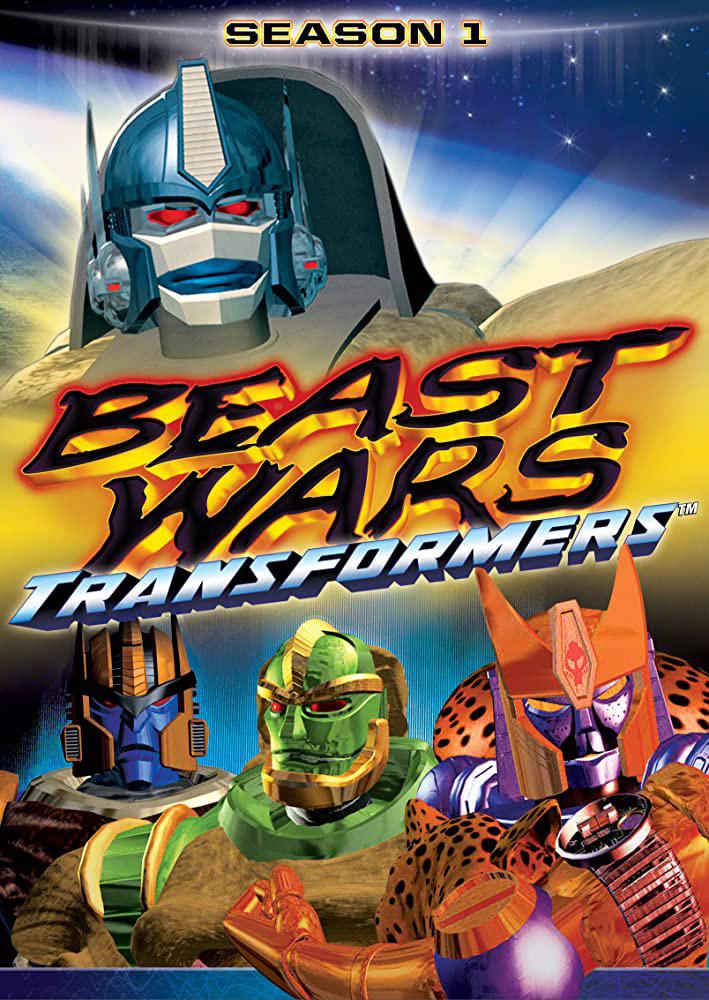
Talk about nightmare fuel—and why does Optimus Prime have smooth lips? He's a robot! This yielded an entire generation of shitty kids' media. I mean awful. These shows are, again, probably remembered fondly by kids of that generation, but they didn't know what they were missing. What this eventually produced was a return to 2D and "2.5D" media, except with a different motif.
I could list all the different methods for modern-day cartoon creation, but I might leave you bored, passed out on the floor in a puddle of your own drool. Ultimately, they create assets and manipulate them like digital puppet masters. It's modern magic. After creating all of these digital models, they can reuse them incessantly, churning out the same crap in different arrays of slop. (Looking at you, CoComelon, with your dead-eyed, giant-headed toddlers swaying to public domain nursery rhymes.) I'm going to sound like a grumpy old man and say that it's lazy. It's not lazy because they're being more efficient; it's lazy because it sucks. Don't get this mixed up with the masterpieces that Pixar churns out, or even studios like Illumination (Minions). Those are high-quality, digitally rendered pieces of content that take a lot of time to produce. I'm talking about the piles of trash that you find on streaming services and everywhere else in between. But ultimately, the shift to cheap digital puppet-mastery was just the setup. The final nail in the coffin for the epic Saturday morning cartoon was the screen it’s being watched on.
Today's Short-Form Dumpster Fire
Today, much of children's media is dominated by streaming services like YouTube, Netflix, and the like. It's not that this content is inherently worse than what's been coming out over the past few decades; it's the format in which it's presented.
Short-form media is absolutely rotting our brains. Remember that old 90s rule about shows being 30 minutes? That doesn't apply to streaming services. So now we have tons of shows like Danny Go! and Koo Koo Kanga Roo maxing out at 15 minutes or shorter per episode. If you have young children, you know what these shows are. If not, your kids definitely do, because shows like the aforementioned are used in classrooms across the country to provide "brain breaks." Shit, the only brain break I got as a kid was sleep.
Anyway, I believe these shows are contributing to shorter attention spans and less imaginative play. Kids aren't the only ones having their brains rotted; adults are, too.
Vine, TikTok, IG, or every other piece-of-shit software peddling their low-quality garbage are even worse than the streaming platforms. Again, I digress. The current trend is to produce as much content as possible to receive the most clicks, likes, and views to manipulate "the algorithm" and maximize potential monetization. What this has produced is even shorter media in the form of 10-to-30-second clips of low-quality, digital excrement. According to the NIH, "Excessive short-form media consumption causes measurable cognitive overload, reduced executive control, and mental health strain."
How about that? Too much TV really does rot your brain.
Too much screen time is bad for kids' brains, period. Recommended limits for school-age children are less than two hours a day, and experts recommend focusing on quality content. But how can you provide quality content when they're bombarded with all the aforementioned trash of today?
The Real Masters of the Universe
As parents, we are indeed the masters of our kids' universe. One thing we can do is closely monitor what they're watching and limit the amount they consume. Do we, as parents, always have the bandwidth and energy to do this? No, we don't. But I would wager that if you're at least cognizant of the perils of today's media consumption, you'll be prepared and subconsciously trying to keep your kids from binge-watching Gabby's Dollhouse all day.
Also, maybe find a classic or two on the ol' streaming box and show your kids what cartoons could be. Introduce them to the epic storytelling of yesteryear, and let them be emotionally scarred like I was watching Duke get a snake-spear in the heart from Serpentor. Okay, perhaps don't let them watch that one, but I think you get the point.
As we age, we always feel nostalgic for the past, and it just gets worse with time. Call me a grumpy old man, a curmudgeon; it doesn't matter. I'll always have the good memories of the past, and I do think a lot of things were superior when I was a kid. But that doesn't mean my girls aren't having their own experiences today, and I shouldn't ruin that for them by telling them how much their generation sucks... even if it does.
Dad out.